A student scores 40 out of 50 in a combined science paper. Good result. Now answer this: should she revise Physics, Chemistry or Biology before the next test?
The total cannot tell you. It is the same 40 whether she lost all ten marks in one subject or dropped three or four in each. Teachers have always known this, which is why the honest ones sit down afterwards and count the wrong answers by hand, subject by subject, for forty students. Tagging the paper once removes that evening entirely.
Why a total hides the problem
Combined papers are everywhere — Science that is really Physics, Chemistry and Biology; Social Science that is History, Civics and Geography; a NEET mock that is three subjects in one booklet. In all of them the useful information is which part the marks went missing from, and that is precisely the part a single total destroys.
Two students on 40 out of 50 can need completely different revision. One is weak on a single chapter. The other is slightly shaky everywhere. Treating them the same wastes the class time you have.
Tagging the sections
Open the exam's answer key and tap Set up beside Topic sections. You are defining ranges: a start question, an end question, and a subject.
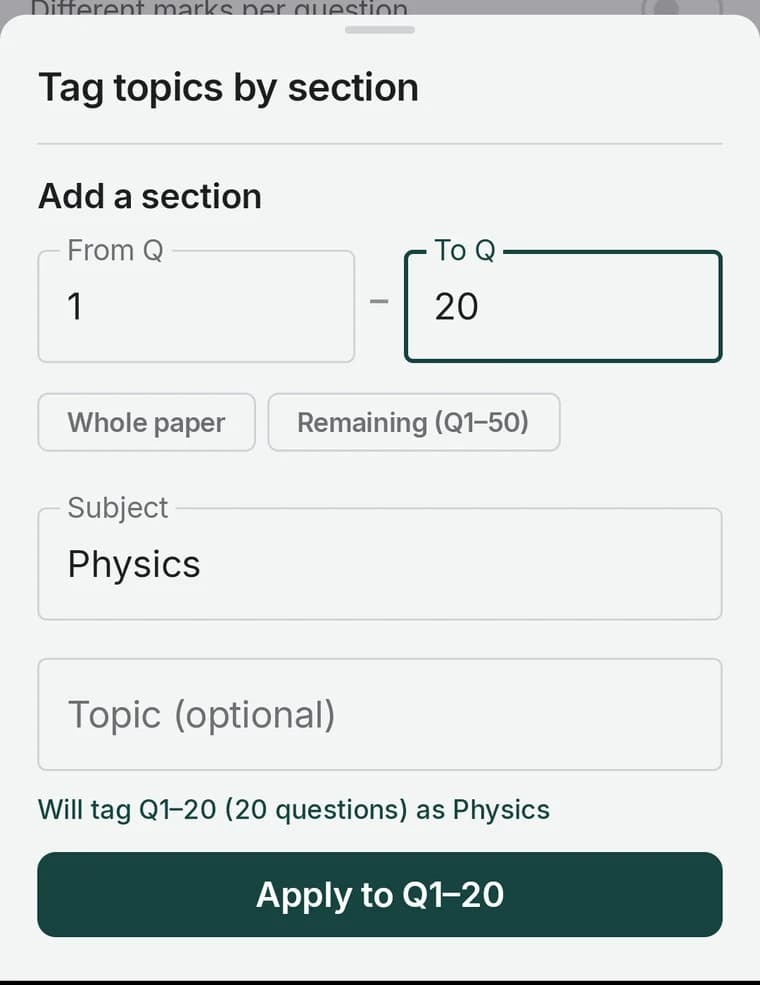
A few things make this quicker than it looks. After each section is applied, the next one starts where the last finished, so you are only ever changing the end number. There is a Whole paper shortcut and a Remaining shortcut. The subject field suggests the usual names as you type. And a counter keeps telling you how many questions are still untagged.
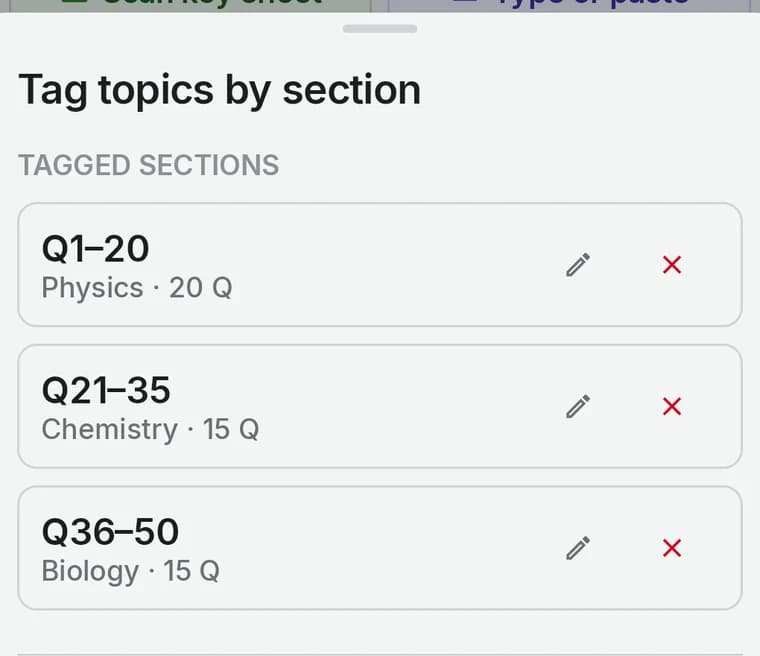
You do not have to tag everything. A partly tagged paper still scores normally and still reports on the ranges you did set, so tagging only the chapter you are worried about is a perfectly reasonable thing to do.
What a scan comes back with
Nothing changes about scanning — same sheet, same four seconds. What changes is the result screen, which now carries a By section card under the totals.
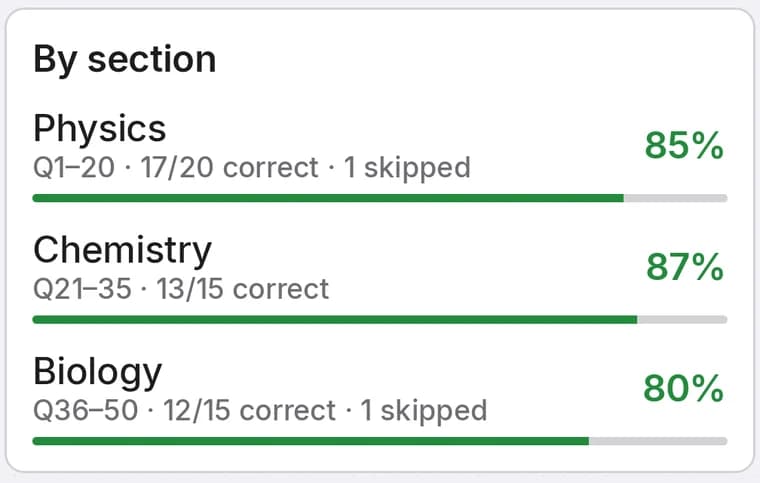
Each line names the range it covers, how many were right out of how many, how many were left blank, and the percentage. For the student above: Physics 85%, Chemistry 87%, Biology 80% — close enough that the honest answer is “no single weak subject, revise broadly”. That is a real finding, and it is one you could not have had from 40/50.
Reading it across a class
Per-student sections are useful at a parent meeting. The pattern across the whole class is what changes your teaching. Scan the pile and look at the section percentages together: if thirty of forty students drop their marks in the same range, that is not thirty weak students, that is one chapter that did not land.
For the question-by-question version of the same idea — which individual questions the most students missed — see the class result analysis guide. The two work well together: sections tell you which chapter, item analysis tells you which question inside it.
Patterns worth copying
What it will not tell you
- It is ranges, not labels per question. Sections are contiguous blocks of question numbers, so a paper that alternates subjects question by question needs reordering before tagging helps. Most printed papers already group by subject.
- It does not know why. A low section score can be a weak chapter, a badly printed set of questions, or simply the section students reached last when time ran out. Which it is comes from knowing your class.
- Small sections wobble. Five questions is a very thin basis for a percentage; one careless mistake moves it twenty points. Ten or more per section before you take the number seriously.
Tagging is free, works offline, and needs no account — it is part of the scanning the app does on the phone. The whole thing is thirty seconds of setup per exam, and it is the single cheapest way to turn a pile of marked paper into something you can actually teach from.